As per its name, Koodjal Booka skins are custom façade systems created with the people who will live with them.
Each skin can connect a home to Country, community, culture and family identity, making every place distinctly its own.
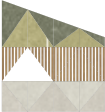
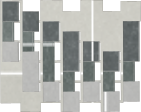
TYPE I
Inspired by the hills of Western Australia
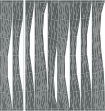
TYPE II
Inspired by the Tiger Snake
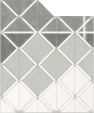
TYPE III
Inspired by the scales of a crocodile
TYPE IV
Inspired by midden piles, oyster shells
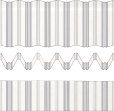
TYPE V
Inspired by the waves of our oceans
TYPE VI
Inspired by the scales of a fish
Inspired by the elements
Earth, fire, air and water are presented here as examples of how art can influence the form and feeling of a home.
They are not intended to define what these elements mean for every community. Meanings, associations and cultural protocols differ between places and people.
Every final skin would be created through a community led process. Families, artists, Elders and cultural knowledge holders would decide what should be represented, how it should appear and what is appropriate to share.
More than a façade
The skin is the outer layer of a Koodjal Booka home. It influences how the home looks, feels and belongs within its surroundings.
Rather than taking one design and applying it everywhere, we want each skin to respond to the community and Country where the homes will stand. Colours, patterns, materials and forms can change to reflect the people and places they represent.
Every community has its own identities, relationships, knowledge and cultural protocols. The design process begins by listening.
How the skins are created
Listen: We begin with the community’s priorities, cultural protocols and ideas about what home and belonging mean to them.
Co-design: Families, artists, Elders and other community nominated participants explore colours, stories, forms and imagery through a locally appropriate design process.
Develop: The chosen ideas are translated into practical façade concepts that work with the Koodjal Booka building system.
Review and approve: The community and relevant cultural authorities review the design, its meaning and how it will be used before anything is finalised.
Make it home: The approved skin becomes part of the home, creating a visible connection between family, community and place.
Earth
Grounded in Country
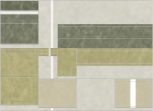
The Earth studies explore patterns, colours and forms connected with the land.
One concept draws inspiration from the colours and markings of the tiger snake. Another responds to the shapes and colours of the hills of Western Australia. Layered lines and pathways can also express movement, journeys and the ways people connect across Country.
These ideas could be adapted with communities to reflect their own landscapes, plants, animals, stories and relationships with Country.